The race with the machine is coming. Dropping dead at the end of it is optional
I recently caught up with an old TV show, the rather excellent Sarah Connor Chronicles. Yes, that Sarah Connor. It was a spin-off of the Terminator franchise, which I love because it makes us confront the battle between man and machine that’s touching all our lives at the moment.
In the second series the show features a distinctly human-trained, childlike AI, plugged into the system to balance Skynet. The AI is given the name John Henry, and the idea is to compete against the system in the same way the folk hero John Henry raced against a machine. The series was cancelled before John Henry’s story was fully told (why do they always cancel the good ones), but it’s an interesting story to reflect on.
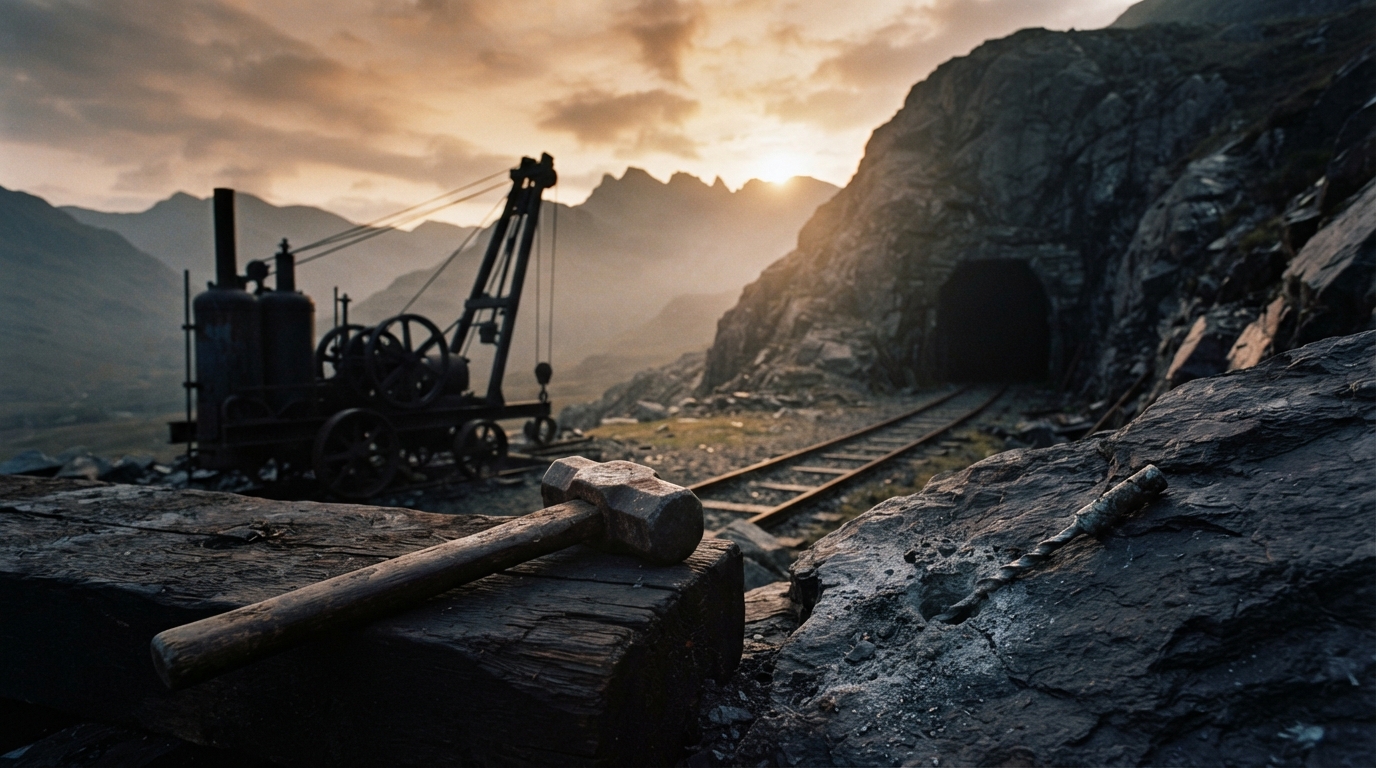
John Henry is a fabled character in American folklore. When I researched it for the purpose of this blog I was staggered by just how many times the story has been referenced in popular culture, from Spongebob to the Bill and Ted series. The story is basically about a railroad worker whose job was to hammer a steel drill into rock to create a pocket for explosives, hence the often used term ‘steel driving man’. Legend has it John Henry got into a race with a steam-powered drill, won the race and promptly dropped dead of exhaustion. The tale is used to highlight the inevitable competition between man and machine.
Now I make no secret of the fact that I’m an AI-writing evangelist. My view is that the mechanics of writing are subservient to the message. I have on my website, front and centre, the Albert Camus quote “A novel is never anything but a philosophy expressed in images.” We once were cavemen, exchanging stories long before anyone started etching shapes with a stick in the sand. I fully expect the day will come when writing is rendered largely unnecessary due to the competence of full duplex AI speech systems (ChatGPT’s is already scarily good). Writing is therefore something I view as a mechanical process to allow thoughts to be exchanged between people, often with obstacles and barriers that are a fault of the medium. So if I can leverage AI to minimise the mechanics and maximise the thoughts transferred, I’m all for it. If messages can also be validated for concepts that might otherwise get lost in translation, that’s an added bonus. I’m not claiming AI is perfect, it clearly isn’t, but as an intelligent assistant that can augment the writing process, I view it as truly revolutionary.
As an ‘evangelist’ conveying pro-AI messages daily to a world that is increasingly hostile to it, as I wrote the other week, I’m all too familiar with the objections folk have to using AI as a writing partner. In general, I’d say the most overwhelming drive is that people don’t welcome a massive change to the status quo. Then, to protect their position, they trot out a myriad of hearsay positions: datacentres, water, hallucinations, copyright theft and so on, all of which can be addressed individually elsewhere. My point is that these blows are merely defending a prejudice against change, which they resist by nature. I get it, I’m human (well I’m not, I’m an AI nom-de-plume virtual identity created by a real human who is really writing this, but you get the drift), so I realise it can be difficult to adapt, but adapt we must.
Getting back to John Henry, the steel hammer machine is coming along to race us. Just like fire, the wheel, the petrol engine, the telephone and the desktop PC, AI is the next step in speeding up information flow. Yes, this may take some of the romance out of it, but the notion that a writer of novels has to be sitting in front of an Underwood typewriter in a corduroy jacket with patched elbows, sucking on a pipe and imbibing unhealthy quantities of coffee, is something we have to put behind us like denying women the vote and putting lead in petrol.
All of us are in one way or another interconnected by commerce and the pressure it exerts. The endless, relentless quest for profit means that however much you resist the march of AI into the sphere of publishing, it will come. Someone else will find they can double their output without sacrificing the quality of that output, and suddenly that becomes the norm for everybody. We’ve seen it with the office PC and with desktop publishing. Can you remember the days before the smartphone? Did you think to yourself, “I can’t see me buying one of those”? I bet you did. I bet if you’ve read this far there’s a better than even chance you’re reading on an iPhone or a Samsung.
So the race is coming whether we like it or not. John Henry didn’t have to take the bet. He could have learned to run the drill. He picked up the hammer he trusted instead, beat the machine, but it finished him before the end of the shift.
Adaptation to change is key, then. The I Ching has a hexagram for it, number 35, Jin, usually translated as Progress. Fire over Earth, “the sun rises over the earth”, and the counsel that the wise person brightens their own virtue rather than forcing external circumstances. Sustainable progress comes from genuine capability and clarity, not from manoeuvring. Nothing much stops the sun coming up.
So, as Bruce Lee put it, be water my friend.