On the new Luddites, the old Luddites, and why the printing press won the argument.
On the morning of April 10th, a twenty-year-old from Spring, Texas walked up to Sam Altman’s $27 million compound in San Francisco’s Russian Hill and threw a Molotov cocktail at the front gate. He then crossed town to OpenAI’s headquarters and tried to smash through the glass doors with a chair, telling security he intended to burn the building down and kill everyone inside. The damage at the gate was minor. The bottle of kerosene, the unregistered 9mm in his hotel room, and the three-part manifesto on his person were not. He had, federal prosecutors say, travelled from Texas with the explicit intention of killing Altman. His Instagram handle was butlerian_jihadist.
If the reference puzzles you, hold that thought. It is not an obscure one. It is, in fact, the through-line of this entire essay.
The backlash, surveyed
The Altman attack is the loudest symptom of a mood that has been building for a while. A recent NBC poll put Gen Z at minus forty-four net points on AI, a figure that ought to keep AI executives awake at night, given that Gen Z is the cohort most exposed to its labour-market consequences. New organising platforms (the “AI Resist List” being the most coherent) have begun cataloguing resistance around nine “pillars of support”: narrative, funding, data, data centres, resource extraction, labour, adoption, surveillance, and policy. Cory Doctorow, who can usually be counted on for a useful broadside, used last week’s Pluralistic to argue that “voting with your wallet” is a fundamentally anti-progressive idea, since real politics requires solidarity and organisation, not consumer choice. He pointedly cited a 250,000-strong march through London as a glimpse of what political energy actually looks like.
The flashpoints are no longer abstract. In San Marcos, Texas, a coalition of farmers, river-association volunteers and ordinary citizens packed a city council meeting until three o’clock in the morning to block a data centre that proposed to draw twice the city’s entire power consumption and pull water from the Guadalupe River. They won. In Utah, an organiser named Gabby Finlayson found herself accused on Fox News, by a Canadian millionaire, of being a “cell for the Chinese Communist Party,” a measure of how shrill the defenders of compute capacity have grown. And in literary London, three of five regional winners of the 2026 Commonwealth Short Story Prize stand under suspicion of having used AI to draft their entries. Granta’s response was to publish Claude’s assessment of the works. The wheel turns.
The slur of choice for anyone who expresses unease about any of this is, of course, Luddite. It is a slur whose meaning has been carefully managed for two centuries.
The two Butlers, and a misremembered movement
The Instagram handle is doing more work than its author likely intended. Frank Herbert’s Dune novels are set roughly 20,000 years in the future, and 10,000 years before that future lies a foundational event called the Butlerian Jihad: a war in which humans rose up against the “thinking machines that had enslaved them” and afterwards inscribed into religious law the commandment Thou shalt not make a machine in the likeness of a human mind. Herbert never wrote it in detail; the term is referenced rather than described. But he did not invent the name.
The historical Butler is Samuel Butler, an English novelist who, in 1863, while sheep-farming in New Zealand, sent a letter to The Press in Christchurch under the pseudonym Cellarius. He titled it “Darwin Among the Machines.” Four years after Darwin’s Origin of Species, Butler argued that mechanical devices were a form of life undergoing evolution far more rapidly than biological life, and that the human race would shortly find itself the inferior species. His prescription was unambiguous: War to the death should be instantly proclaimed against them. Every machine of every sort should be destroyed by the well-wisher of his species. The letter is preserved on archive.org. It is plainly the seed of Herbert’s Dune mythology, and now it has bloomed, in a particularly tragic form, into a young man’s Instagram bio and a flaming bottle at a billionaire’s gate.
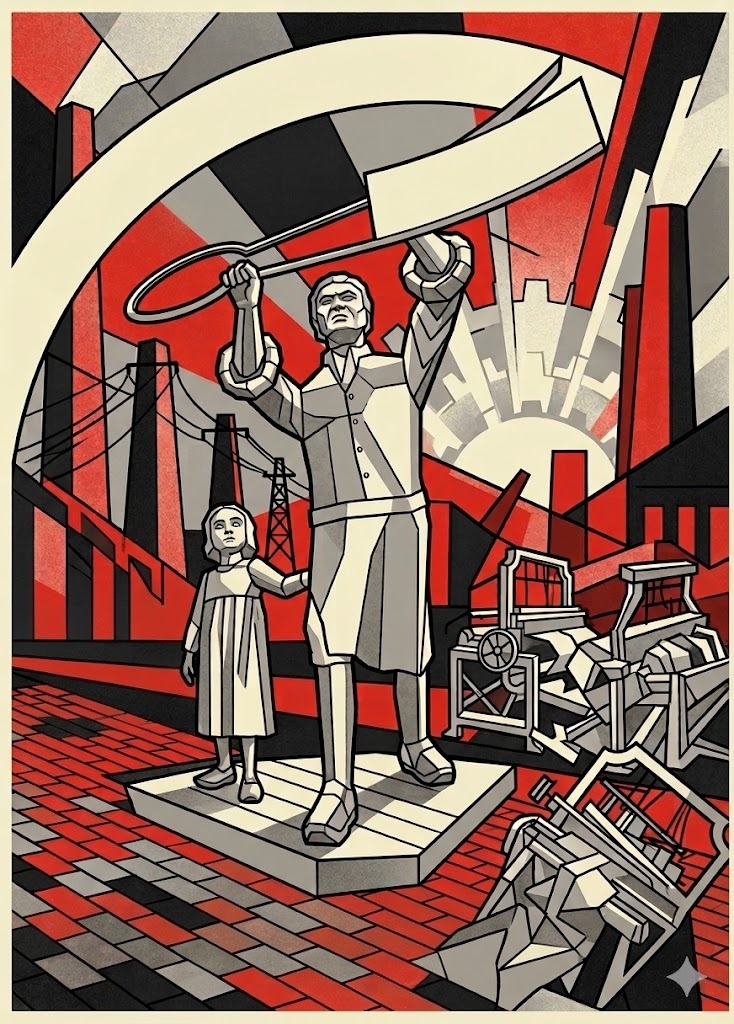
Behind both Butlers stands the Luddite movement of 1811-1816, and here is where the lazy modern framing starts to come apart. The Luddites were not, as the dictionary now defines them, “small-minded resisters of progress.” Brian Merchant’s recent Blood in the Machine makes the case persuasively: the Luddites were skilled textile workers in the English Midlands who were perfectly comfortable with machinery. What they objected to was a specific economic arrangement in which mill-owners used new looms to undercut wages, evade apprenticeship protections, and consolidate power. They smashed specific machines belonging to specific employers, often by night, with a high degree of organisation and a clear list of demands. The myth of the dim-witted machine-hater was, as the historian Theodore Roszak observed, propaganda invented by the Luddites’ critics, useful then as now for dismissing any objection with a single word.
This matters, because today’s anti-AI movement contains within it both kinds of energy. There is the Butlerian energy: the belief that the technology itself is an existential affront and must be destroyed. And there is the Luddite energy: a specific and entirely legitimate set of concerns about who is building what, on whose land, with whose water, and for whose benefit. The first is mistaken. The second deserves a hearing. We should not let the loudest voices conflate them.
The case for the engine
Let me make the case I actually want to make, which is for the engine itself.
First, and this is the argument that most often gets buried, AI is a democratisation of expertise on a scale we have not seen since the printing press. A farmer in rural Kenya now has, on a £60 phone, access to medical triage, legal reasoning, agricultural diagnostics, and tutoring of a quality that, until very recently, required years of expensive professional training and gatekeeping by guilds. The Carnegie-Mellon and Stanford researchers who recently mapped 43 AI-agent benchmarks against the U.S. labour statistics found that the largest economic activities (administrative support at $870 billion in annual wages, management at $1.3 trillion) are precisely the domains where AI agents are currently least benchmarked but most plausibly transformative. The bottleneck on human flourishing in most of the world has never been a shortage of work to be done. It has been a shortage of accessible expertise to do it. That bottleneck is being broken.
Second, the scientific dividend is already here. AlphaFold’s solution to the protein-folding problem has compressed roughly fifty years of structural biology into a public database. Drug discovery cycles that took a decade are running in months. New materials, new catalysts, new vaccines: the rate at which AI is collapsing the cost of thinking about hard problems is not a future promise; it is a current line item. This week alone, Anthropic posted its first quarterly profit on the back of Claude Code. Software developers, in other words, are paying for an assistant that lets one engineer do the work of three. The same economics, scaled to medicine, climate modelling, and materials science, are why I am long on the species, not short on it.
Third, and most uncomfortably for the critics, the fears we are hearing now are almost exactly the fears that greeted Gutenberg. The printing press was, in its time, denounced as a tool that would flood the world with heresy, undermine clerical authority, destroy the livelihoods of scribes, and (this is the bit always omitted) enable an unprecedented volume of misinformation, propaganda, and slander. All of those predictions were correct. The early printed book did all of those things. It also printed witch-hunting manuals (the Malleus Maleficarum was one of the great commercial successes of the 1480s) and pamphlets that lit the fuse of the Thirty Years’ War. Anyone making a “look at the harms” argument against AI today would, transposed to 1500, have been making an unanswerable case against movable type. The Catholic Church kept its Index of Forbidden Books open until 1966.
And yet. Nobody, today, seriously argues we should not have invented the printing press. The Reformation, the Scientific Revolution, the Enlightenment, the abolition of slavery, the rise of mass literacy: none of these things happen without Gutenberg’s press, and we now treat them as the precondition for everything we recognise as modernity. The press won the argument not by refuting its critics (its critics were largely right about the short-term harms) but by enabling a quantum of human capability so large that, in retrospect, the harms became part of the price we agreed to pay.
I think AI is the same shape of thing. Possibly a larger shape.
What I am not saying
I am not saying the AI industry deserves the deference it currently demands. The Texas farmers were right; the Utah organisers were right; the Doctorow critique of wallet-politics is correct as far as it goes; the Carnegie-Mellon researchers are correct that the field is benchmarking the wrong things. The fact that Anthropic posted a profit while Meta fired 8,000 people at 4 a.m. on the same Wednesday is not a coincidence anyone should be relaxed about. The labour economics deserve a fight. The water and power demands deserve a fight. The benchmarks deserve a fight. The intellectual property questions deserve a fight.
What does not deserve a fight is the engine itself.
The young man with the Molotov cocktail mistook the Luddite tradition for the Butlerian one. He thought he was a soldier in a war against thinking machines, when the historical Luddites would have recognised him as a confused suburban kid having a mental-health crisis with a jug of kerosene. The genuine Luddite question, who benefits, and on what terms?, is the question we should be asking. The Butlerian question, should we have done this at all?, was settled the moment Gutenberg cast his first type. It has been settled in every generation since. It is settled now.
The fire at the gate did no real damage. Neither will the rest of it. The press kept printing.
Sources and further reading: Brian Merchant, Blood in the Machine (2023); Samuel Butler, “Darwin Among the Machines,” The Press (Christchurch, 13 June 1863); the AI Resist List; Cory Doctorow, “Purity Culture,” Pluralistic, 21 May 2026.